Forest Bathing: Reconnecting with Nature for Whole Person Wellness

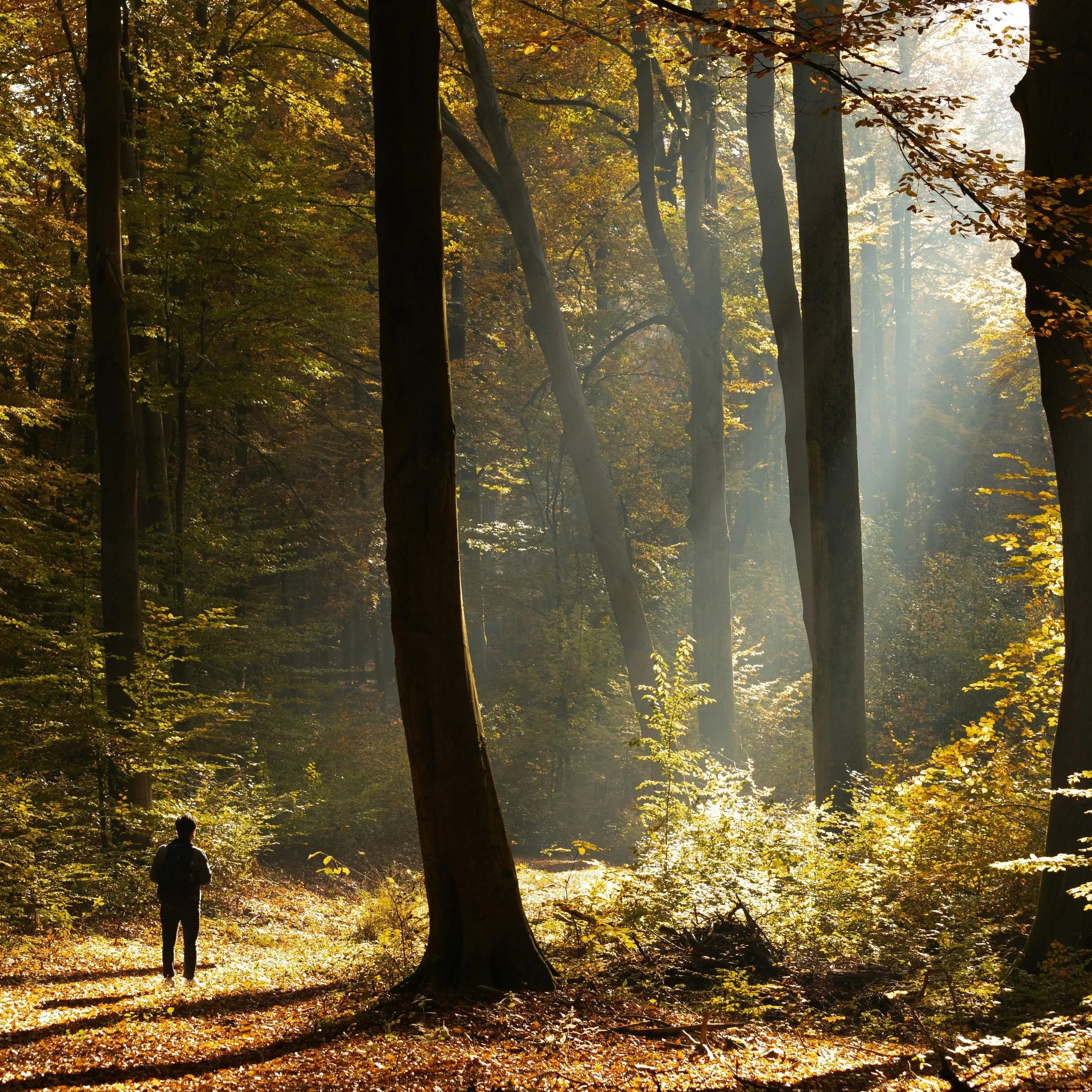

In today’s fast paced, technology driven world, many people feel disconnected from nature, from their bodies, and sometimes even from themselves. Forest bathing offers a gentle and accessible way to restore that connection. At HELD, we believe healing happens when people feel supported, grounded, and present, which is why forest bathing is one of our favorite offerings.
What Is Forest Bathing?
Forest bathing, also known as shinrin yoku, originated in Japan and literally translates to “taking in the atmosphere of the forest.” Rather than hiking for exercise or reaching a destination, forest bathing is about slowing down and mindfully engaging the senses, including sight, sound, smell, touch, and even taste, while immersed in a natural environment. Clients may walk slowly, sit quietly, breathe intentionally, or engage in guided sensory awareness practices designed to promote relaxation and presence.
A Brief History
The practice emerged in Japan in the 1980s as a public health response to rising stress levels and lifestyle related illnesses associated with urbanization and overwork. Since then, forest bathing has grown into a global wellness movement supported by an expanding body of scientific research and professional training programs. It is now practiced in many countries as both a preventive health strategy and a complementary therapeutic approach.
Benefits Supported by Research
Research shows that spending mindful time in forest environments can positively impact both mental and physical health. Studies have demonstrated reductions in stress hormones such as cortisol, improvements in mood, and decreases in anxiety, depression, and fatigue following forest immersion experiences (Park et al., 2010).
Forest bathing has also been linked to measurable physiological benefits, including lower blood pressure, improved heart rate variability, enhanced sleep, and increased immune system activity, particularly the activation of natural killer cells that help defend the body against illness (Li, 2022).
Additionally, time in nature appears to support cognitive functioning by allowing the brain to rest from constant stimulation, improving focus, attention, and overall mental clarity (Kotera et al., 2020). While forest bathing is not a replacement for medical treatment, it is increasingly recognized as a valuable complementary wellness practice that supports whole person health across mind, body, and nervous system regulation.
Forest Bathing and the HELD Experience
At HELD, our mission is to provide complementary and therapeutic services that nurture healing, connection, and well being within our community. Forest bathing aligns beautifully with this mission because it meets people exactly where they are, offering calm, restoration, and a sense of being supported without pressure or performance.
As part of a HELD experience, guided forest bathing is intentionally designed to help clients regulate their nervous systems, reduce stress, and reconnect with themselves and the natural world. Whether you are seeking emotional balance, stress relief, or simply a meaningful pause from daily demands, forest bathing can be a powerful addition to your wellness journey.
If you are interested in learning more about forest bathing or participating in a HELD experience, we invite you to check out our upcoming events or contact us for more information.
Healing does not always require doing more. Sometimes it begins with simply being present, supported, and HELD.
-
Kotera, Y., Richardson, M., & Sheffield, D. (2020). Effects of shinrin yoku and nature therapy on mental health: A systematic review and meta analysis. International Journal of Mental Health and Addiction, 19, 337–361. https://doi.org/10.1007/s11469-020-00363-4
Li Q. (2022). Effects of forest environment (Shinrin-yoku/Forest bathing) on health promotion and disease prevention - the Establishment of "Forest Medicine". Environmental health and preventive medicine, 27, 43. https://doi.org/10.1265/ehpm.22-00160
Park, B. J., Tsunetsugu, Y., Kasetani, T., Kagawa, T., & Miyazaki, Y. (2010). The physiological effects of shinrin yoku (taking in the forest atmosphere): Evidence from field experiments in 24 forests across Japan. Environmental Health and Preventive Medicine, 15(1), 18–26. https://doi.org/10.1007/s12199-009-0086-9